Indian army chief says ‘not against demilitarisation of Siachen’
Indian Army Chief General M M Naravane said that his country was not against demilitarisation of the Siachen Glacier.

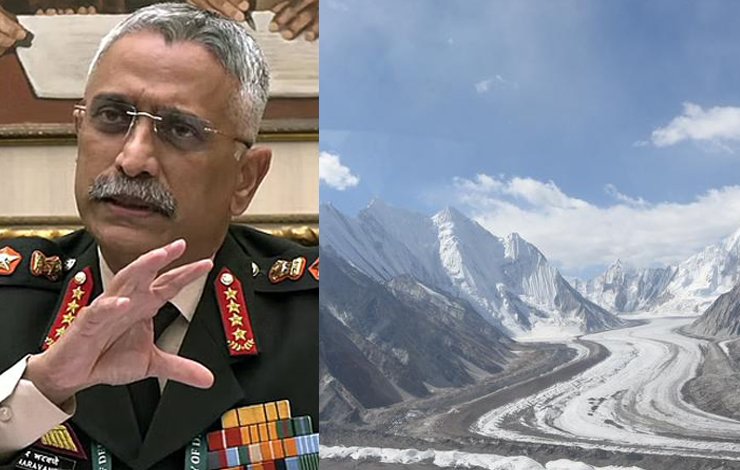
NEW DELHI: Indian Army Chief General M M Naravane said that his country was not against demilitarisation of the Siachen Glacier if Pakistan accepts the Actual Ground Position Line (AGPL) dividing the two countries positions.
The Indian army chief made the statement in his annual press conference quoted by The Print ahead of the Army Day on January 15.
General Manoj Mukund Naravane hinted at the conditional agreement of India from Siachen Glacier if the Actual Ground Position Line (AGPL) dividing the positions of both countries is accepted by Pakistan.
He said that the militarisation of Siachen was a result of an attempt by Pakistan to unilaterally change the status quo in late 1984, forcing India to take countermeasures, since then, the armed forces of both countries have been face-to-face all along the Siachen Glacier.

“The Line of Control had been delineated to a point called NJ 9842, and thereafter, the understanding was that it will remain unoccupied,” he said.
He said that more than 800 Indian soldiers have lost their lives there due to extreme cold and difficult terrain, without a single shot being fired since 1984 when India carried out Operation Meghdoot, which led to the capture of the glacier.
“We are not averse to demilitarisation of the Siachen Glacier, but the pre-condition is to accept the AGPL. Pakistan has to accept what are their positions and has to accept what are our positions,” Gen. Naravane said.
He added that both armies have to sign on dotted lines before any kind of disengagement takes place.
“This is quite parallel to what is happening in eastern Ladakh. You have to first disengage, only then you can de-escalate or de-induct, which is another way of saying demilitarisation,” he said.
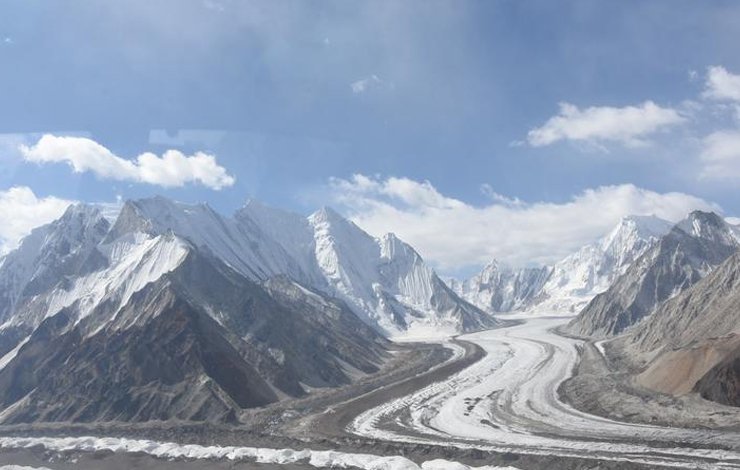
Gen. Naravane underlined that acceptance of the AGPL is the first step of this process and “that is something Pakistanis I think ought to do”.
Reuters have disclosed some main facts about the Siachen glacier region:
Siachen is in the northern part of Kashmir. Muslim-majority Kashmir is at the heart of hostility between India and Pakistan and was the cause of two of their three wars (the third was over the founding of Bangladesh)
Indian and Pakistani forces, estimated to number between 10,000 and 20,000 troops combined, have faced off against each other in mountains above the Siachen glacier in the Karakoram range since 1984.
The no-man’s-land of Siachen is 20,000 feet (6,000 metres) above sea level. Military experts say the inhospitable climate and avalanche-prone terrain have claimed more lives than gunfire.
The strategic importance of the glacier is debatable, military experts say. Until 1984, neither side had troops there.
