Bill to reduce powers of CJ submitted in National Assembly: what will be President’s reaction?
Analysts further say government has made two attacks on jurisdiction of Supreme Court in one day, Now matter to be seen is what action Supreme Court takes?

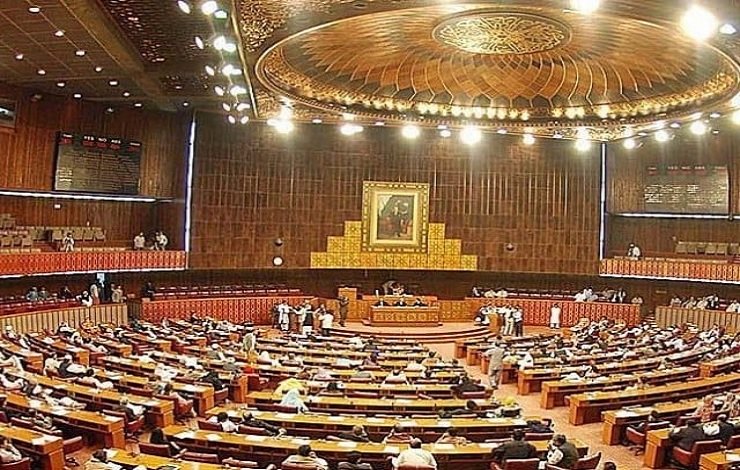
Law Minister Azam Nazir Tarar presented the bill related to judicial reforms in the National Assembly after the approval of the federal cabinet. Under this, any automatic notice case will be decided by a bench consisting of three senior judges of the Supreme Court.
The question arises that the bill to reduce the powers of the Chief Justice has been presented, but will the President of the State sign for the approval of this bill? And will the Supreme Court be happy on this issue?
Speaker National Assembly Raja Pervaiz Ashraf has referred the bill to the Standing Committee on Law for further consideration at the request of the members of the assembly and has directed the committee to submit a report by today.
Election Commission has no authority to extend election date: Supreme Court
Prime Minister Nazir Tarar has introduced the Judicial Reforms (Supreme Court Practice and Procedure Bill 2023).
The Federal Cabinet has approved the draft legislation to curtail the discretionary powers of the Chief Justice of Pakistan.
The Bill ensures that any suo-moto notice taken by the Supreme Court under Article 184(3) of the Constitution will be decided by a bench comprising the three most senior judges of the court.
The bill states that “every case or appeal before the Supreme Court will be heard by a bench constituted by a committee consisting of the Chief Justice and two senior-most judges. The decisions of the committee will be taken by majority.”
The Bill states that any decision of a bench of the Supreme Court exercising jurisdiction under Article 184(3) shall lie within 30 days in appeal to a larger bench of the Supreme Court. It further states that the appeal shall be fixed for hearing within a period of not less than 14 days.
Govt gets 2260 billion rupees loan from central bank in 8 months, report
The resolution was also passed by the National Assembly that the Supreme Court will not interfere in the affairs of the Election Commission.
The development comes amid growing debate in the country over the discretionary powers of the Chief Justice of Pakistan to constitute benches, ‘fix’ cases, and initiate public interest proceedings under Article 184 (3) of the Constitution.
Analysts say that after this debate, the question arises whether the confirmation of the President of the country will be necessary for the approval of this bill and whether will he sign for the approval of this bill.
Analysts also say that the bill will automatically pass after 15 days, but the President can stop it for 15 days.
Analysts further say that the government has made two attacks on the jurisdiction of the Supreme Court in one day. Now the matter to be seen is what action the Supreme Court takes. And what action does the President take?