


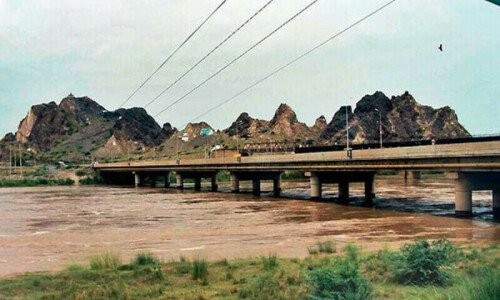
After a 24-hour halt, India has abruptly released water into the Chenab River, causing a rapid surge in water levels at Head Marala, reaching up to 28,000 cusecs. The development has triggered concerns of potential flooding, with local authorities placed on high alert.
According to the Punjab Irrigation Department, the sudden release of water by India could create a dangerous situation, with further rise in water levels expected tonight. Just hours earlier, the riverbed appeared nearly dry, but the abrupt flow has drastically changed the scenario.
Experts warn that such unpredictable actions not only violate the Indus Waters Treaty but also pose a serious flood threat to Pakistan. In response, the Indus River System Authority (IRSA) has decided to closely monitor the flow and discharge data of the Chenab River to address any emergency promptly.
This move comes in the wake of India’s decision to suspend the Indus Waters Treaty following the Pahalgam attack, which it has blamed on Pakistan. Indian media earlier reported that water flow from the Baglihar Dam on the Chenab had been halted. Reports also suggest that similar actions are being planned for the Kishanganga Dam on the Jhelum River.
According to India’s CNBC-TV18, the Baglihar Dam was first completely emptied, its gates shut, and water will not be released again until the reservoir is refilled, raising alarms in Pakistan over the geopolitical use of water as a weapon.
Meanwhile National Assembly of Pakistan on Monday has unanimously passed a strongly worded resolution against India’s alleged water aggression and false flag operations, warning that any attempt by New Delhi to block Pakistan’s water will be considered an open declaration of war.
The resolution, moved during a session chaired by Speaker Sardar Ayaz Sadiq, condemned India’s decision to suspend the Indus Waters Treaty, describing it as a blatant violation of international agreements and a provocative act tantamount to warfare.
The resolution also condemned the recent terrorist attack in Pahalgam, Jammu and Kashmir, and categorically rejected Indian attempts to link the incident to Pakistan. Lawmakers described the move as part of a “systematic and malicious campaign” by the Indian government to malign Pakistan’s image internationally.
“Pakistan condemns all forms of terrorism and the killing of innocent civilians goes against our core principles,” the resolution stated, reaffirming Pakistan’s longstanding position as a victim of terrorism, not a perpetrator.
Assembly reaffirms full support to Kashmiris’ struggle
The resolution renewed Pakistan’s unwavering political, moral, and diplomatic support to the people of Indian Illegally Occupied Jammu and Kashmir (IIOJK), calling their right to self-determination a legitimate and just struggle.
It also condemned India’s role in sponsoring terrorism and targeted killings in Pakistan and other regional countries.
Any aggression will be met with a decisive response: NA
The National Assembly warned that any misadventure by India would be met with a strong and decisive response, similar to the retaliation seen in 2019 after the Balakot airstrike.
“Pakistan is fully capable of defending its sovereignty and will not compromise on national security under any circumstances,” the resolution stated.
Speaker Ayaz Sadiq, addressing the House, said it was unfortunate that India continues to level baseless allegations against Pakistan without evidence. He emphasised that Pakistan had demanded a transparent investigation into the Pahalgam incident and reminded the international community of Pakistan’s sacrifice of over 90,000 lives in the fight against terrorism.
Opposition leader Omar Ayub’s hard-hitting speech on India’s actions
Leader of the Opposition and Pakistan Tehreek-e-Insaf (PTI) senior figure Omar Ayub on Sunday delivered a fiery speech in the National Assembly, declaring that Pakistan must never speak in a weak voice before its enemies. He stressed that if war breaks out, the nation, opposition included, will stand united to defend the motherland.
Referring to India’s recent actions, Ayub said, “Prime Minister Modi has suspended the Indus Waters Treaty. This very treaty had previously sparked wars between India and Pakistan. Today, Modi is using it as a weapon. Suspending this treaty will be considered an act of war.”
He added, “God forbid, if war erupts, even we in the opposition are ready to lay down our lives for the country.” Taking a swipe at historical criticism, Ayub stated, “People claim General Ayub Khan sold our rivers to India. If that were the case, how is India now able to block that water?”
Maulana Fazlur Rehman walks out of over government’s ‘lack of seriousness’
Jamiat Ulema-e-Islam (F) chief Maulana Fazlur Rehman staged a walkout from the National Assembly on Monday, citing the government’s “lack of seriousness” amid heightened national tensions.
Speaking to the media outside the assembly, “This was a time when the House should have been packed. The government should have delivered a strong and united response. But the entire front row is empty — who are we supposed to speak to?” he questioned.
The JUI-F chief added that he had no interest in addressing an assembly that the government itself had seemingly abandoned. “If the government were serious, it would have come to the House and taken us into confidence about the situation,” he said, referring to recent national security concerns and tensions with India.
Fazlur Rehman further remarked, “Where no senior government figure is present, I cannot remain seated in such a House.”
Following the walkout, Deputy Speaker National Assembly tasked Dr. Tariq Fazal Chaudhry with the responsibility of persuading Maulana Fazl and other JUI-F lawmakers to return to the session.