


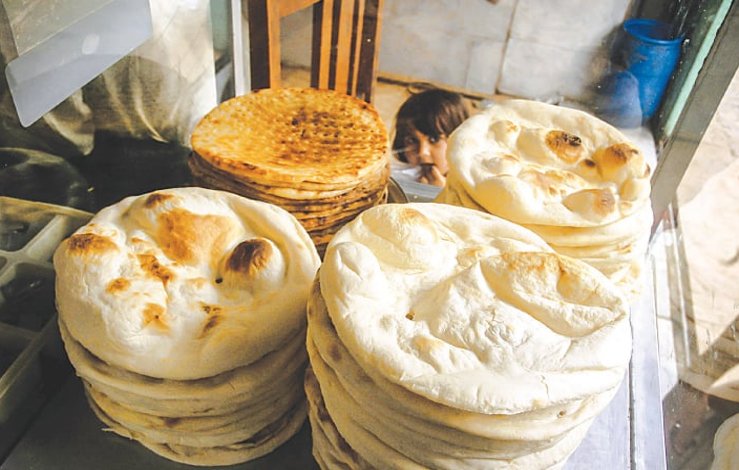
In Islamabad and Rawalpindi, roti and naan prices have been increased by 25% by Naanbais, increasing the roti price from Rs13 to Rs15 and naan price from Rs15 to Rs20.
Citizens complained that despite the increase in the price of roti, low-weight roti is being sold and no action is being taken by the local administration. In Islamabad, the price of a 15-kg bag of flour has been increased from Rs1,250 to Rs1,300.
In October 2020, the price of roti was increased from Rs10 to Rs12 and the price of naan was increased from Rs12 to Rs15 rupees and the price of paratha from Rs20 to Rs30 In Islamabad and Rawalpindi but the administration kept a complete silence.
Naanbais association said that they were forced to increase the prices of roti and naan due to the hike in the prices of flour, fine flour, maida (fine wheat flour), gas and electricity.
The price of a 50-kg sack of maida was also increased by Rs1,000 during a month, increasing its price from Rs3,600 to Rs4,600. The bakery owners said that they have left no option other than increasing the prices of the products.
Citizens expressed anger over the increase in the prices of roti and naan. They say that all essential items including wheat, flour, sugar, ghee and now roti became expensive, due to which the poor man could not even afford two meals a day.
They said that the former prime minister Imran Khan used to say that the people are not getting nutritious food, which is affecting the development of the people, especially young children, while the current premier Shehbaz Sharif in April 2009 as the Chief Minister of Punjab announced to provide roti at Rs2 by keeping in view of the financial troubles of the poor people.
The citizens also criticised the Pakistan People’s Party (PPP) that raised the slogan of providing food, cloth and house to the national, but now the claims of the leaders of Pakistan Tehreek-e-Insaf, Pakistan Muslim League-Nawaz and People’s Party have been left behind. Due to high prices and lack of purchasing power, roti, which is the staple food of Pakistanis, cannot be afforded by the people.
According to the national nutrition survey, Pakistan is one of the countries with the worst food crisis, which threatens the socio-economic development.
According to this survey, 64 per cent of children under the age of five are facing iron deficiency while 54 per cent are facing deficiency in Vitamin A and 40 per cent Vitamin D.
This deficiency is also present in Pakistani women. 51 per cent of Pakistani women suffer from anaemia while 37 per cent of pregnant women are iron deficient, 46 per cent are vitamin A deficient and 69 per cent are deficient in vitamin D.