


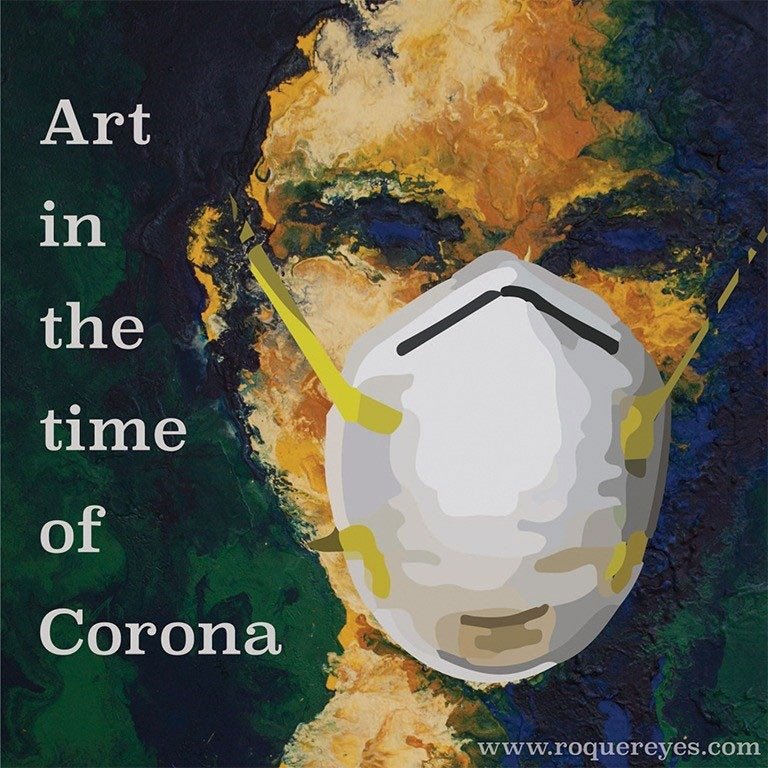
Art is what makes us humans thrive during these unprecedented times of coronavirus. It enlightens our soul and mind and gives us comfort that we are not alone suffering in these difficult times.
‘Brother belov’d if health shall smile again,
Upon this wasted form and fever’d cheek:’
On 23rd February 1821, second-generation Romantic poet and colleague of lesser means of Percy Bysshe Shelley and Lord Byron, John Keats succumbed to an outbreak of tuberculosis after having lost his parents and his brother who remained in his care till his own demise.
He was twenty-five at the time. His poetry is filled with metaphors that refer to fevers and illness, mortality, and the fleeting nature of all the beauty that exists in the world and that keeps the fire of admiration burning in the hearts of those who face their mortality untimely like himself.
From February 1918 to April 1920, the Spanish flu infected a quarter of the world in four deathly, successive waves.
It was during this time that artists like Egon Schiele and Edvard Munch laid out their paintbrushes and began to paint their isolation away.
The HIV/AIDS epidemic broke out in 1981 and has affected 76 million people and has taken the lives of 33 million of them. To this day movies like ‘A Normal Heart’, ‘1985’, ‘Dallas’ Buyers Club’; books like ‘The Great Believers’, ‘Holding the Man’; plays like ‘Burn This’ reign over the hearts of the people who keep alive the anger and sorrow that the epidemic brought about.
The first case of the coronavirus or COVID-19 was reported in Wuhan, China in December 2019. Since then, the virus has infected 66.6 million people worldwide and has resulted in 1.53 million deaths. Frontline workers like doctors, nurses, caretakers, and scientists working on the vaccine are working day and night to provide life-saving care and prevention to the general public suffering from what soon bloomed and fit the status of a global pandemic.
At the other end of the line are the unsung heroes trying to keep a different kind of outbreak at bay. Artists are creating art at an astonishingly rapid rate and putting it out into the world.
A pandemic that is characterized by its need for distance and often, isolation, will doubtlessly weigh heavily upon humans who are sophisticated social animals and have created identities and systems just to belong in the society.
Feelings of loneliness soon take over, followed by alienation. The tragedy that 7.6 billion people in the world are alone no one will understand. Anger is often the seed of grief which eventually flowers a complete lack of motivation and depression, the same ‘Ode to Melacholy’ Keats wrote about centuries ago.
‘there is loneliness in this world so great
that you can see it in the slow movement of
the hands of the clock.’
If most of the human experience is feeling and if those feelings turn sour, artists create a space for community and understanding through a careful symbiosis.
They slowly begin processing their own feelings of loneliness, grief, and anger in a way that not only rids them off this negativity but serves as a catharsis for their audience.
It is the job of an artist in society to create a metaphysical sense of togetherness in a time where a physical one is not possible.
When audiences consume this art, they are consistently fed the idea that they are not alone in their sorrow and solitude, and cannot be abandoned in a world filled with people.
Something about being human is a little less stressful when misery can be shared, not in a sadistic way, just in a mutual understanding.
Artists are responsible to fill the void in time and in people’s lives that outbreaks/pandemics create, all the things that they cannot do anymore, all the people they lose or can’t visit anymore can be seen in the holograms that art creates.
We meet our love through poetry and paintings, we confront our grief through film and music, we fill our time with books so that we can come out on the other side a whole person, still complete even if some of that wholeness is sorrow because after all, that, in part, is being human.
As we now stand before the end of this pandemic, this is a rundown of our comfort zones in the turbulent year gone by.
The most accessible form of art entertainment that peaked popularity during this pandemic is TV and film.
I tried to count the number of waking hours that the television in my house remains switched on for and lost count soon enough.
It is with this one device that we find families sitting together and paying attention to the same thing, it fills time sufficiently, provides structure to the day so that whatever else is lost, an hour each day is spent following a fictional story that doesn’t require too much thought and helps steer thoughts in a more productive manner instead of delving into negative thought processes that lead nowhere.
‘Ertugrul’, ‘The Queen’s Gambit’, ‘Money Heist’ provided audiences with long-term fiction to enjoy while ‘Pandemic’ and ‘Coronavirus Explained’ aimed to spread awareness about outbreaks and the need to follows standards of protection. TV Series ‘Euphoria’ also came up with a singular episode recently, calling it a Christmas special.
Read Also
How 2020 Turned The Tables of Music in Pakistan?
Netflix, Hulu, and Amazon Prime have continually come up with changing sets of movies, while ‘Rebecca’, ‘Mank’ and ‘Tenet’ satiated movie fans.
Popstars like Lady Gaga, BTS, Miley Cyrus, Dua Lipa, and Tame Impala have given a good contribution to music in the pandemic. Recently, studios like Coke Studio and Velo Station have come out with new music that hasn’t just hit the recent rage but has also reigned over the world of TikTok, a community of creators from all social classes creating content that everyone can relate to, find humor in or be taught by.
Another big hit has been the new normal of marketplaces, online shopping.
Textile and jewelry designers have taken to the internet including local artists including brands like Khaadi, Orient, Oaks, Ideas, and many more to provide fresh designs.
This is a testament to what art does; even if these clothes aren’t to be worn anywhere at the moment, there is hope for normalcy in the near future by owning them.
Goodreads has kept replenishing itself with new fiction, non-fiction, and poetry for all ages with ‘Shuggie Bain’ being awarded the Pulitzer Prize for the year 2020.
The British Council Library in Pakistan not only furthered the expiration of memberships for 7 months but has also come up with a booking system to borrow books from the library too and from its doorstep until it reopens. Members have been awarded a six month free trial of the British Council Digital Library with a horde of access to fiction, non-fiction, academic journals, theatre shows, film, and music.
The Library has also been responsible for keeping online literary and linguistic events for all ages that are free and open to non-members as well, advertising and scheduling them on Facebook.
From Salman Toor’s exhibition at the Whitney Museum of Art in the U.S.A. to National College of Art’s Zahoor-ul-Akhlaq Gallery in Lahore exhibiting ‘Mera Safar’, from Karachi’s Sanat Initiative to Canvas Gallery’s advent of online exhibitions, visual artists have created a world separate the physical one they were used to or familiar with.
Online art marketplaces like Fitoor and now even Facebook and Instagram have opened up their doors to support upcoming artists both financially and with their art and have provided audiences a much-needed break from reality. ‘Theartnewspaper’ that deals with news from the contemporary art world now has a Coronavirus tab on its website.
National Theatre in the U.K. kept its doors closed but regularly updated their website and Instagram for reading theatres and throwbacks to old shows that audiences enjoyed.NAPA in Karachi kept up the shows following appropriate SOPs.
The Rekhta Foundation kept its sixth ‘Jashn-e-Rekhta’ online while the 13th Aalmi Urdu Conference was held in Karachi’s Arts Council.
As we near the end of this pandemic, I sign off this wonderful round-up of a year of art with this hope that you can latch on to.
‘Whatever you’re feeling right now, there is a mathematical certainty that someone else is feeling that exact thing.
That is not to say you’re not special,
this is to say thank god you aren’t special.’