Govt Decides to Delegate Cabinet Powers to Foreign Ministry
New law is expected to help the Pakistan government to fulfill its obligations towards the UNSC by expediting the seizure of properties of banned groups

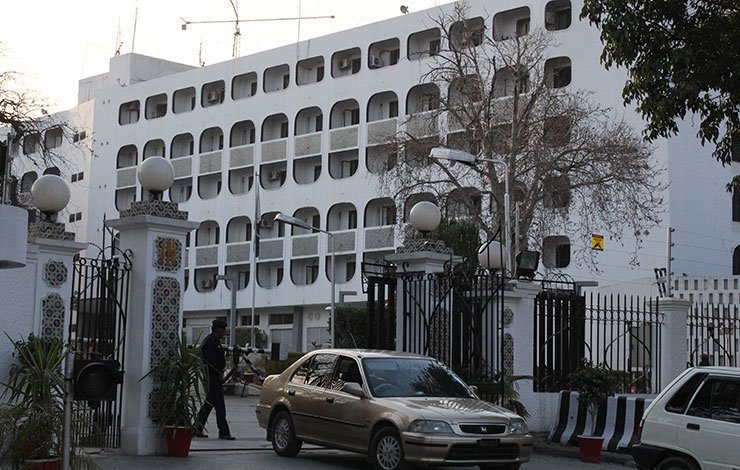
ISLAMABAD: The government has decided to delegate the federal cabinet’s powers to the Foreign Affairs Ministry for smooth discharge of international obligations and the Ministry of Foreign Affairs has sought approval from the Cabinet Committee for Disposal of Legislative Cases (CCLC) in this regard.
Well-informed sources disclosed that the Ministry of Foreign Affairs, in a summary, has asked the Cabinet Committee for Disposal of Legislative Cases (CCLC) to approve the delegation of cabinet’s powers to the Foreign Affairs Ministry for compliance with international obligations under United Nations Security Council (UNSC) resolutions and relevant Financial Action Task Force (FATF) recommendations. And, CCLC is expected to take an important decision in this regard very soon.
Ministry of Law and Justice has already vetted a draft notification for the delegation of powers to the Ministry of Foreign Affairs for issuing the Statutory Regulatory Orders (SROs) under the UNSC Act 1948 with effect from 30th July 2020, said sources.
They added that though SROs are required to be issued on short notice, however, it is practically not possible to seek approval of the cabinet for issuing each SRO.
According to the sources, the ministry of foreign affairs has pleaded before CCLC that there is a requirement of the delegation of powers to the ministry of foreign affairs for smooth discharge of the country’s international obligations under the UNSC Act 1948. The Foreign Affairs Ministry has seen and authorized the submission of the summary to the CCLC, said sources.
“In view of the foregoing, approval is solicited for delegation of powers to issue SROs under the UNSC Act 1948 to the ministry of foreign affairs with effect from 30th July 2020,” said sources.
In accordance with Pakistan’s international obligations under various UNSC resolutions and relevant FATF recommendations, the SROs pursuant to the UNSC Act, 1948 are required to give domestic effects to sanctions imposed by the UNSC on individuals and entities.
It is pertinent to mention that Pakistan has been on the FATF’s grey list since June 2018. The grey list comprises countries being monitored by the watchdog.
The Financial Action Task Force (FATF) while reviewing Pakistan’s progress on the 27-point action plan for addressing anti-money laundering and terror financing in its plenary session that started on 21st October 2020 had found that Pakistan has successfully complied with 21 out of 27 points of action and decided to keep the country on its ‘grey list’ until February 2021.
FATF strongly urged Pakistan to swiftly complete its full action plan by February 2021. The FATF said that Pakistan is needed to work on four areas to address its strategic deficiencies.
Earlier, the government had promulgated a law to streamline the procedure for the implementation of the UN sanctions against individuals and organizations, amid mounting pressure from the global community to rein in the terror groups operating on its soil and curb their financing.
The new law was expected to help the Pakistan government to fulfill its obligations towards the UNSC by expediting the seizure of properties of banned groups and individuals.
Furthermore, following the promulgation of the new law, the government had taken action against the proscribed organizations including JeM in the past and any future action against them will be taken in the light of the National Action Plan (NAP) and Pakistan’s commitments in connection with the Financial Action Task Force (FATF).




10 Comments