PALSP Urges SBP to Slash Interest Rates and Salvage Pakistan’s Industry


Pakistan Association of Large Steel Producers (PALSP) is urgently calling upon the State Bank of Pakistan
(SBP) to lower interest rates during the upcoming Monetary Policy meeting. The steel industry, a linchpin of Pakistan’s
Steel industry plays a pivotal role in Pakistan’s economic landscape, providing direct employment to more than 300,000
individuals and acting as a robust support system for numerous downstream industries, directly affecting 7.5m jobs in
various sectors. However, steel industry now is facing an existential crisis due to an unprecedented liquidity crunch,
stemming from the combination of reduced working capital and weakened purchasing power of mills due to colossal
increased capital requirements. This dire situation has already forced the closure of several small to medium-sized steel
mills, resulting in significant job losses. If the current sky-high interest rates persist, the steel industry’s sustainability
remains in jeopardy, and the impending unemployment crisis will become an issue that both the SBP and the government
must address.
At present, the SBP’s key interest rate stands at a staggering 22%, a level not seen since early 2011. This interest rate is the
highest in comparison to other countries, rendering Pakistan’s domestic steel industry uncompetitive and unsustainable.
Shockingly, while the central bank’s interest rate for industries in Pakistan is a record high of 22%, it pales in comparison
to rates in neighboring countries, such as 6.5% in India, 3.45% in China, 6.5% in Bangladesh, 2.5% in Thailand, 6% in
Indonesia, 3.65% in Vietnam, 10% in Sri Lanka, 1.875% in Taiwan, and 3% in Malaysia.
According to a recent report by JS Global, “Based on a 12-month forward CPI, real interest rates have turned positive since
September 2023 and are expected to experience a significant expansion with the current Policy Rate at 22%. In the absence
of negative CPI surprises, the SBP has an opportunity to initiate monetary easing sooner than anticipated.” Looking ahead,
the next 12 months’ CPI averages at 19%, reflecting a positive real effective interest rate of 300 basis points. By January
2024, the 12-month forward CPI shows a 7.25 basis point positive real interest rate. In light of these developments, the SBP
must consider a substantial interest rate reduction of 500 basis points in the upcoming Monetary Policy Committee (MPC)
meeting.
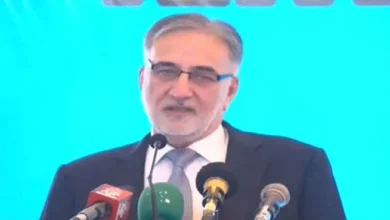
Wajid Bukhari, Secretary General of PALSP, underlined the urgency of the situation, stating, ” Due to high interest rates,
Government of Pakistan’s debt servicing has shot up to Rs7.6 trillion, consuming majority of the net income of the Federal
Government. These rates just don’t make sense and SBP must act urgently to aid in creating fiscal space for the government
to do infrastructure projects, that are direly needed after the record flooding witnessed in Pakistan. The government must
realize the gravity of the crisis and implement immediate measures to support businesses and encourage investment in the
country. Implementing business-friendly policies is not merely about preserving jobs in the steel industry; it is essential for
the overall economic well-being of Pakistan. The health of the steel industry has a direct impact on the broader economy.
Our policymakers must focus on creating an enabling environment and formulating long-term policies to foster our local
industries.”