


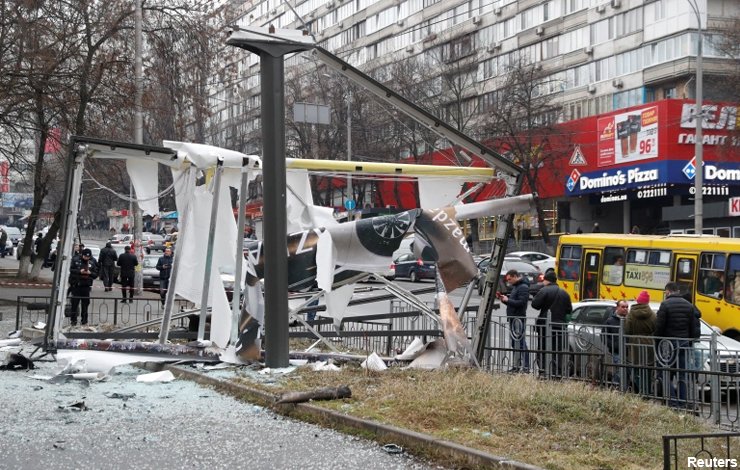
The launch of the full-scale invasion of Ukraine has once again started speculations about the dream of Russian President Vladimir Putin of restoring the Soviet Union.
Russia launched a full-scale invasion of Ukraine on Thursday, unleashing airstrikes on cities and military bases and sending troops and tanks from multiple directions in a move that could rewrite the world’s geopolitical landscape. Ukraine’s government pleaded for help as civilians piled into trains and cars to flee.

In 2014, the Russian army had overtly invaded eastern Ukraine to support the rebels during their fight with the Ukrainian military to regain its influence over the Texas-size country wedged between Russia and Europe.
In February 2014, the anti-government protests had toppled the government and ran then-President Viktor Yanukovych out of the country after he rejected a deal for greater integration with the European Union. Russia had invaded while trying to salvage its lost influence in Ukraine and annexed Crimea the next month.
Crimea is considered by most of the world to be a region of Ukraine that’s under hostile Russian occupation. Russia considers it a rightful and historical region of Russia that it helped to liberate in March. Geographically, it is a peninsula in the Black Sea with a location so strategically important that it has been fought over for centuries, an article of Vox read.
Ukraine or Soviet-era ‘the Ukraine’
Ukraine was part of the Soviet Union until 1991, and since then has been a less-than-perfect democracy with a very weak economy and foreign policy that wavers between pro-Russian and pro-European.
It used to be “the Ukraine,” but after breaking away from the Soviet Union in 1991 the name changed to just “Ukraine.” That distinction actually turns out to be pretty important for understanding the current crisis, according to Vox.
https://www.vox.com/2014/9/3/18088560/ukraine-everything-you-need-to-know
Restoration of Soviet symbols
Putin had restored some Soviet symbols. He brought back the Soviet national anthem and Soviet emblems, and praised the Soviet triumph in World War Two. But he embraced pre-Soviet themes too. He befriended the Russian Orthodox Church, and name-checked anti-Soviet philosophers like Ivan Ilyin, whose remains he had repatriated to Russia and buried with honour, an article published by BBC read.
Pre-invasion analysis
According to Washington Post, the first will be a new front line of conflict in Central Europe. Until now, Russian forces could deploy only as far as Ukraine’s eastern border, several hundred miles from Poland and other NATO countries to Ukraine’s west. When the Russians complete their operation, they will be able to station forces — land, air and missile — in bases in western Ukraine as well as Belarus, which has effectively become a Russian satrapy.
Russian forces will thus be arrayed along Poland’s entire 650-mile eastern border, as well as along the eastern borders of Slovakia and Hungary and the northern border of Romania. (Moldova will likely be brought under Russian control, too, when Russian troops are able to form a land bridge from Crimea to Moldova’s breakaway province of Transnistria.) Russia without Ukraine is, as former secretary of state Dean Acheson once said of the Soviet Union, “Upper Volta with rockets.” Russia with Ukraine is a different strategic animal entirely.
One likely flash point will be Kaliningrad. The headquarters of the Russian Baltic Fleet, this city and its surrounding territory were cut off from the rest of Russia when the Soviet Union broke up. Since then, Russians have been able to access Kaliningrad only through Poland and Lithuania. Expect a Russian demand for a direct corridor that would put strips of the countries under Russian control. But even that would be just one piece of what is sure to be a new Russian strategy to delink the Baltics from NATO by demonstrating that the alliance cannot any longer hope to protect those countries.
Indeed, with Poland, Hungary and five other NATO members sharing a border with a new, expanded Russia, the ability of the United States and NATO to defend the alliance’s eastern flank will be seriously diminished.
The new situation could force a significant adjustment in the meaning and purpose of the alliance. Putin has been clear about his goals: He wants to reestablish Russia’s traditional sphere of influence in Eastern and Central Europe. Some are willing to concede as much, but it is worth recalling that when the Russian empire was at its height, Poland did not exist as a country; the Baltics were imperial holdings; and southeastern Europe was contested with Austria and Germany. During the Soviet period, the nations of the Warsaw Pact, despite the occasional rebellion, were effectively run from Moscow.
Today, Putin seeks at the very least a two-tier NATO, in which no allied forces are deployed on former Warsaw Pact territory. The inevitable negotiations over this and other elements of a new European security “architecture” would be conducted with Russian forces poised all along NATO’s eastern borders and therefore amid real uncertainty about NATO’s ability to resist Putin’s demands.
A final word about Ukraine: It will likely cease to exist as an independent entity. Putin and other Russians have long insisted it is not a nation at all; it is part of Russia. Setting history and sentiment aside, it would be bad strategy for Putin to allow Ukraine to continue to exist as a nation after all the trouble and expense of an invasion. That is a recipe for endless conflict. After Russia installs a government, expect Ukraine’s new Moscow-directed rulers to seek the eventual legal incorporation of Ukraine into Russia, a process already underway in Belarus.
Some analysts today imagine a Ukrainian insurgency sprouting up against Russian domination. Perhaps. But the Ukrainian people cannot be expected to fight a full-spectrum war with whatever they have in their homes. To have any hope against Russian occupation forces, an insurgency will need to be supplied and supported from neighboring countries. Will Poland play that role, with Russian forces directly across the border? Will the Baltics? Or Hungary? And if they do, will the Russians not feel justified in attacking the insurgents’ supply routes, even if they happen to lie in the territory of neighboring NATO members? It is wishful thinking to imagine that this conflict stops with Ukraine.
2022 invasion
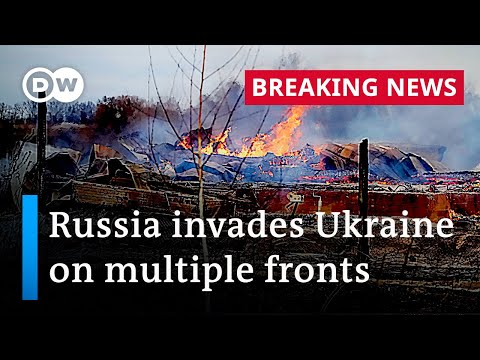
Invading Russian forces pressed deep into Ukraine as violence spiralled, claiming dozens of lives and raising the prospect Moscow will march on Kyiv as the West imposed punishing sanctions in response, foreign media reported.
In a day of intense fighting, Russian missiles and shelling rained down on Ukrainian cities, forcing civilians to seek shelter on metro systems, with others displaced by deadly airstrikes.
Across Ukraine, at least 68 people were killed, including both soldiers and civilians, according to an AFP tally from Ukrainian official sources.
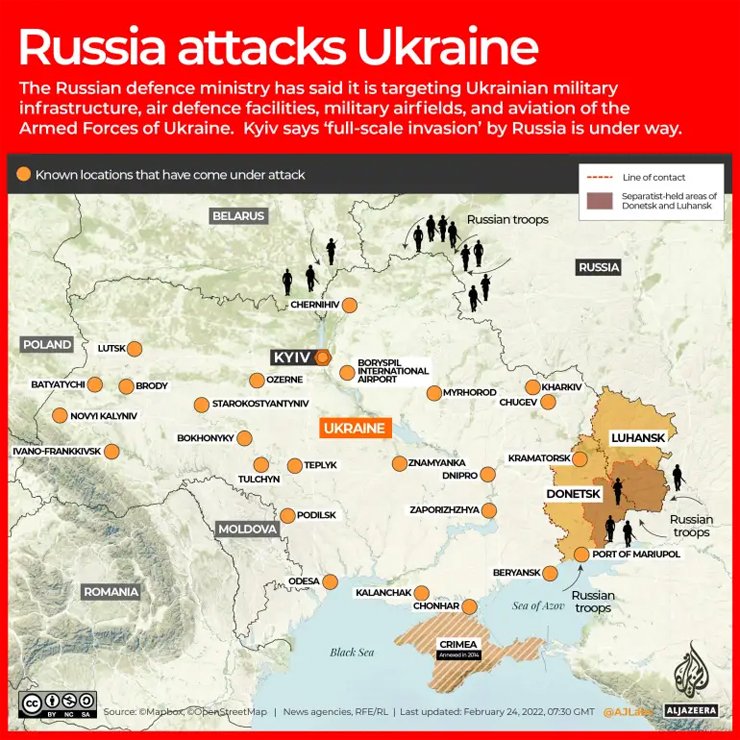
Moscow’s forces seized a key strategic airbase near Kyiv as well as the scene of the Chernobyl nuclear disaster, a vast area still heavily contaminated with radioactive material.
Russia has “eliminated” Ukraine’s air defences and is looking to mass overwhelming forces around the capital Kyiv, a senior Western intelligence officer said in Brussels.

A Russian Antonov An-26 transport plane carrying military equipment crashed in Russia’s southern Voronezh region near Ukraine, killing all crew members on board, the defence ministry said.
Witnesses told AFP that Russian paratroopers wrested control of the Gostomel airfield after swooping in with helicopters and jets from the direction of Belarus. The airfield could now provide a strategic staging post for Russian forces to ferry in troops who could then launch an assault on government buildings and the presidency in Kyiv.
The UN refugee agency said around 100,000 people had fled their homes in Ukraine and several thousand more had left the country since neighbouring Russia invaded early Thursday.

Western intelligence has said that Russia is seeking to mass “overwhelming force” around the Ukrainian capital and that Moscow has established “complete air superiority” over Ukraine.
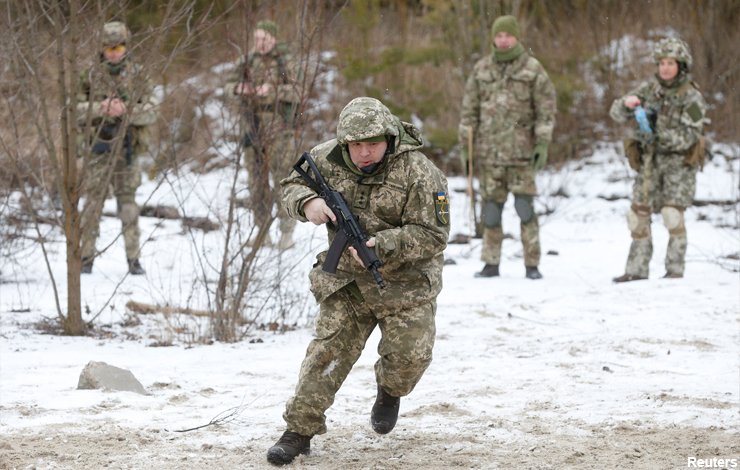
Elsewhere, Russian ground forces moved into Ukraine from the north, south and east, forcing many Ukrainians to flee their homes as the sound of bombing reverberated. Moscow’s defence ministry said its forces had “successfully completed” their objectives for the day, earlier claiming to have destroyed over 70 Ukrainian military targets, including 11 airfields.
Fall of Chernobyl
Ukrainian President Volodymyr Zelensky said there was now a “new iron curtain” between Russia and the rest of the world, like in the Cold War.
Weeks of diplomacy failed to deter Putin, who massed over 150,000 troops on Ukraine’s borders in what the West said was Europe’s biggest military build-up since World War II.
Zelensky called the attack on Chernobyl “a declaration of war on all of Europe” while 18 people were killed at a military base near the Black Sea port of Odessa in the deadliest single strike reported by Kyiv.
Ukraine also said a military plane with 14 people on board crashed south of Kyiv and that officials were determining how many people died, while a transport plane crashed in Russia killing the crew.
Ukrainian forces said they had killed “around 50 Russian occupiers” while repulsing an attack on a town on the frontline with Moscow-backed rebels, which could not immediately be confirmed by AFP.
Ukraine said Russian tanks and heavy armour crossed the border in several northern regions, in the east as well as from the Kremlin-annexed peninsula of Crimea in the south.
US sanctions
US President Joe Biden announced export controls against Russia to cut off more than half of the country’s high-tech imports, alongside sanctions on Russian elites he called “corrupt billionaires”, and banks.
He earlier said the G7 group of wealthy nations had agreed to impose “devastating” economic sanctions. Biden once again said additional US forces were not heading to eastern Europe to fight in Ukraine, but would defend “every inch” of Nato territory.